Strength training
Personalised, evidence-based programming with progression managed through load, reps and RPE. Technique and safety come first, always. For anyone who wants to take their physique and their performance to the next level.
Real strength, measurable progress, nothing improvised
Forget generic routines. Every programme starts from your goals, your training history and your current level. We periodise in blocks and measure every variable so you are always moving forward.
The big lifts, squat, bench press and deadlift, are the backbone. Accessory work fills the gaps, corrects imbalances and maximises performance. Our whole programming methodology is built so that every cycle has a clear purpose.
- Objective progression in loads, sets and reps
- Technique supervised in every single session
- Regular strength tests to measure real progress
- Nutritional guidance aligned with your body composition goal
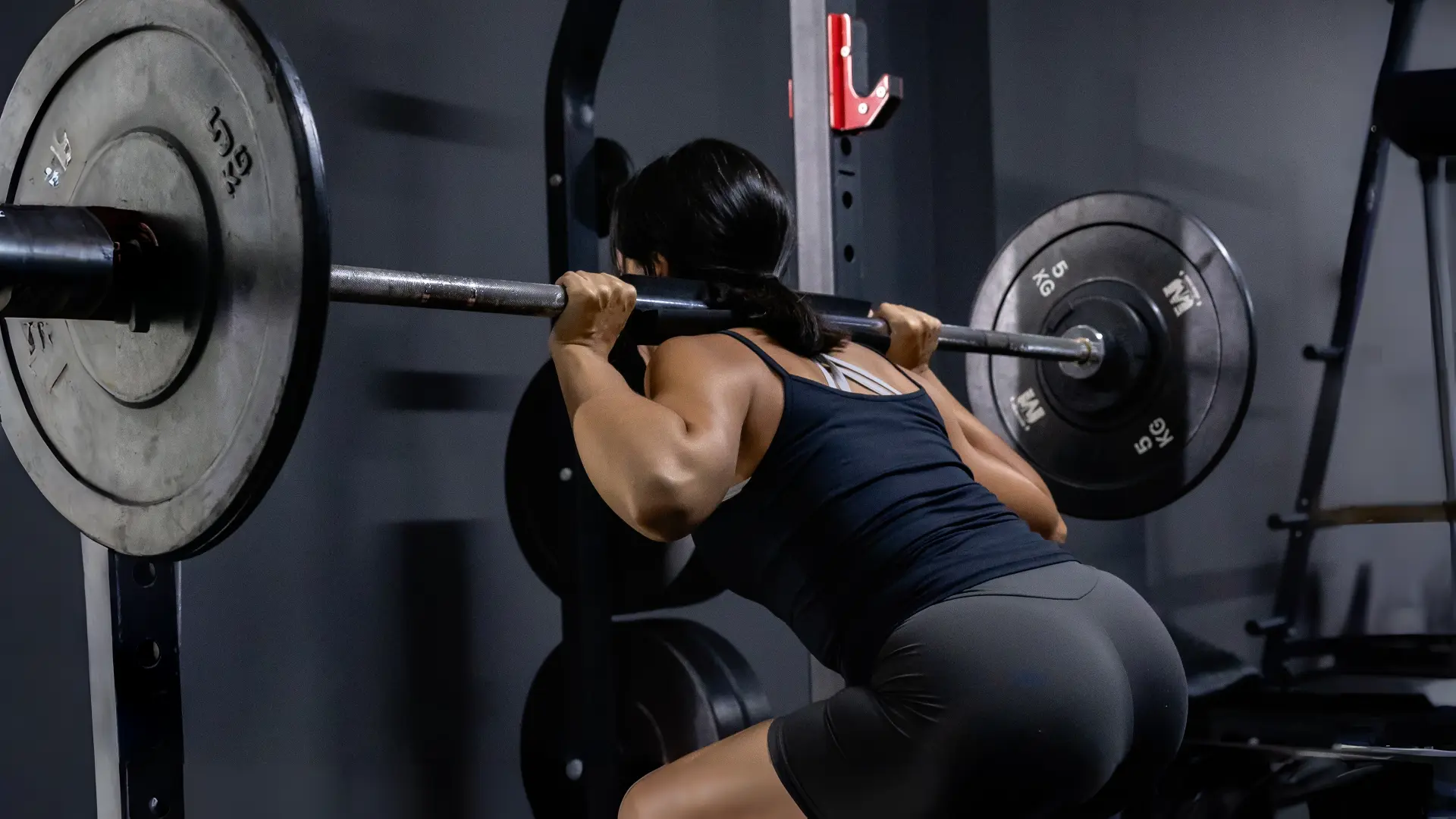
The 3 big lifts of strength training
They are the most efficient movements for building total-body strength. Everything else complements them. Álex Saiz, our strength specialist, designs every cycle around these three pillars.
Squat
The king of lower body exercises. Quads, glutes, hamstrings and core working in sync. We learn to do it properly before we load it.
Bench press
The main upper body pushing movement. Chest, shoulders and triceps. Arch, grip width and touch point: the details that make the difference.
Deadlift
The most complete movement of the lot. The whole posterior chain, grip and core. A solid hip hinge is the most transferable motor skill you can build.
Your progression, step by step
Every phase has a clear objective. No jumps, no rushing. Just intelligent progression.
Initial testing and technical assessment
We assess your technique on the big three, your training history and your current maxes (or estimated ones if you are new). This session sets the starting point.
Block periodisation
We design a macrocycle in phases: volume accumulation, intensification and strength peak. Each block has a purpose and a defined duration.
Progression through load, reps and RPE
We manage load using percentages of your 1RM and rate of perceived exertion (RPE). That way each session adapts to how you feel that day, without rigid rules.
Strength peak and final test
At the end of each cycle we drop the volume (taper) and test your new maxes. The numbers do not lie: that is where you see what you have achieved.
"I don't improvise. Every decision in training has a reason and a purpose. Strength is not an accident: it is the result of doing the right things consistently."
Álex Saiz · Head Coach & Founder, Barcelona Barbell ClubWhat strength training gets you
Real changes, measurable in tests and visible in the mirror. No empty promises.
More strength
Maxes on the big lifts climbing every cycle. Strength is the easiest physical attribute to measure and one of the most important for long-term health.
More muscle mass
Strength training is the most efficient stimulus for hypertrophy when it is paired with adequate protein intake.
More stable joints
Strong muscles protect joints. Knees, hips and shoulders become more stable and get injured less often.
Lower body fat
More muscle mass means a higher basal metabolism. You burn more fat at rest and manage your body composition far better.
Better metabolic health
Strength work improves insulin sensitivity, glucose handling and overall metabolic efficiency. Benefits that go well beyond how you look.
Better performance
Strength underpins every sport. Whether you cycle, run or train martial arts, being stronger always helps.
Ready to get serious about strength?
Your first assessment class is free, with no obligation. Come down and let's talk about your goals.
Common questions about strength training
Can I start strength training if I've never trained before?
Yes, although if you are starting from scratch we will look at whether a phase of personal training (1:1) makes sense first, to build solid technical foundations. Once your movement patterns are sound, progressive overload becomes far safer and far faster. You can begin with a free trial class so we can assess your starting point together.
How many times a week should I train?
For strength, 3 to 4 sessions a week is typical for optimal volume and frequency. We adapt the plan to your availability: there is more than one way to progress when the programming is done properly.
Is nutritional guidance included?
Yes. We provide basic nutritional guidance aligned with your goal: building muscle, losing fat or body recomposition. For complex cases or medical conditions, we refer you to a specialist nutritionist.
I'm a woman, will strength training make me bulky?
No. Gaining significant muscle volume takes years of specific work, a calorie surplus and, in many cases, hormonal support that most women do not have. What you will notice is a firmer, more toned and more capable body, better body composition and a more upright posture. Strength is one of the best forms of training for women's health at any age.
What age can I start strength training? Is there a limit?
There is no real limit. We work with people from 18 to well over 65. In fact, from your 40s and 50s onwards strength training is essential: it fights sarcopenia (age-related muscle loss), improves bone density, reduces fall risk and preserves your independence. We simply adapt loads, volume and exercise selection to each person.
I have back pain / a knee problem / an old injury, can I still train?
In the vast majority of cases yes, and well-programmed strength training is often part of the solution rather than the problem. We assess your case in the first session and, if needed, adapt exercises or coordinate with your physiotherapist. If the injury is acute or you are mid-rehab, we will tell you honestly and wait for the right moment.
How long before I notice progress?
The first 4 to 6 weeks bring mainly neurological gains: you execute better, you feel stronger and the weights climb quickly through technical adaptation. Visible changes in body composition (more muscle, less fat) appear clearly between months 3 and 6 with consistent work. Maximal strength keeps improving for years.
Can I combine strength with running, cycling or another sport?
Yes, and it is usually the right call. Strength improves performance in any endurance sport and reduces injuries. We adjust volume and intensity so strength complements your main training rather than sabotaging it. Tell us your sport and your race calendar and we will plan around it.
How many people are in each session? Is it personal or group training?
We work in very small groups with individual programming. In other words: everyone has their own plan, but trains within a shared time slot under constant coach supervision. If you need a fully private format, you can opt for personal training (1:1).
Is it safe to squat, bench press and deadlift with heavy loads?
Yes, as long as technique is sound and load progression is intelligent. Statistically, supervised strength training has one of the lowest injury rates of any physical activity. The risk shows up when people load without technique, without progression or without recovery. That is why we supervise every key set and nobody adds load until their technique is locked in.
What's the difference between strength training, functional training and CrossFit?
Strength training prioritises maximal strength and muscle mass through planned loads, full recovery and work on the big lifts (squat, bench press, deadlift). Functional training blends strength, conditioning and mobility in a more dynamic format, with less emphasis on your 1RM. CrossFit adds a competitive element and higher metabolic density. They are not mutually exclusive, just different approaches with different goals.
I'm pregnant or have just given birth, can I do strength training?
Strength training during pregnancy, with the right adaptations, is well supported by the evidence and is usually recommended when there is no medical contraindication. Postpartum it is essential for rebuilding muscle, pelvic floor and posture. We always need the go-ahead from your obstetrician or midwife, and we adapt loads, exercises and positions to each trimester or recovery phase.
Do I need supplements to make progress?
No. The vast majority of progress comes from training well, sleeping enough and eating enough protein. Only two supplements have robust, cheap evidence behind them: protein powder (if you cannot hit your intake through food) and creatine monohydrate. The rest is marketing 90% of the time. We will explain it without selling you anything.
Am I going to be sore all the time?
Some soreness in the first 2 to 3 weeks is normal, especially if you are coming back from a break. Once your body adapts, it almost disappears and only shows up when we introduce new exercises or change the stimulus. Soreness is neither a goal nor a sign of a good session.
What happens if I stop for a couple of weeks (travel, injury, work)?
Nothing serious. Up to 2 or 3 weeks off, the loss of strength and muscle is minimal and comes back very quickly. For longer breaks we restart sensibly: drop the load, rebuild technique and progress again. We also give you alternative routines for travel or spells without a gym.
I'm embarrassed that I don't know how to do the exercises, is that a problem?
Not at all. Nobody starts here already knowing. On day one we run a technical assessment with no load, no audience and no rush. Learning technique is exactly what you are here to do; showing off numbers is not our style. The atmosphere is about work and respect, not watching the person next to you.
Do you genuinely track my progress or do I just train?
We track it. We run an initial test, log loads, sets and RPE in every session, repeat the tests at the end of each block and go through the numbers with you. The difference between progressing and going in circles is measurement. It is part of the service, not an add-on.
How much does it cost and how do I get started?
The price depends on how many weekly sessions you do and which format you choose. The quickest route is to book a free trial class: we run an initial assessment, show you the facilities and explain the options that fit your goal and your schedule. No obligation and no hard sell.
Anyone who wants to get stronger
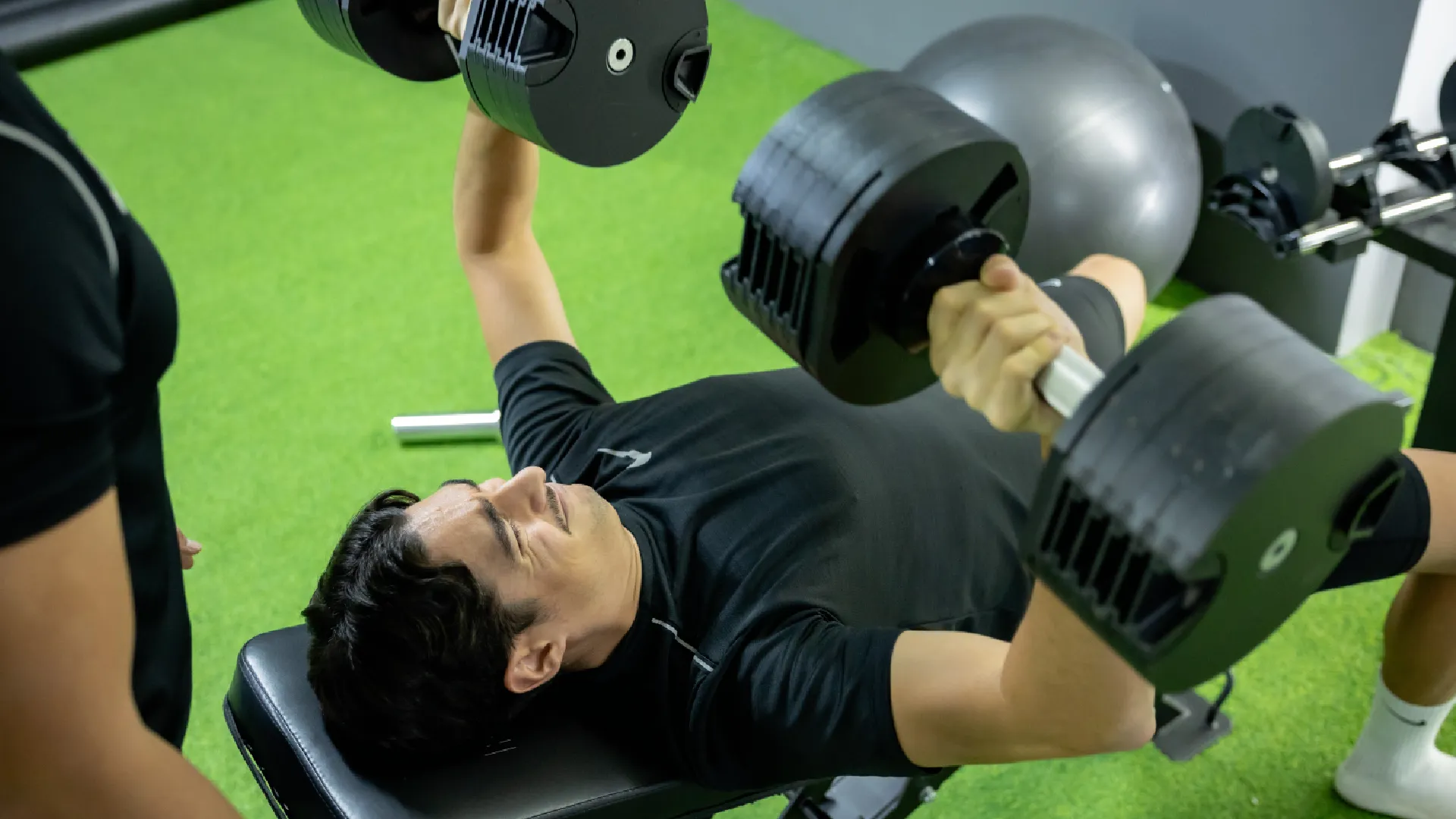
How we train strength
Start your transformation today
Limited places this month. Book your free assessment and find out what training properly feels like, without the crowds.
Try strength training · free
A trial class with a coach who specialises in strength. Mobility and technique assessment plus your initial plan. No obligation.